The History of the TLG®
Searching for Terms of Happiness: How the TLG® Was Born
The Thesaurus Linguae Graecae®, or "Treasury of the Greek Language," was conceived and initially funded by Marianne McDonald. In 1971, McDonald, then a graduate student in Classics at the University of California, Irvine, was conducting dissertation research on "terms of happiness" in Euripides. Her research inspired an ambitious idea: the creation of a computerized database of Greek literature. At a time when computer technology was still in its infancy, the proposal was groundbreaking, envisioning possibilities for classical scholarship that had scarcely been explored.
The creation of the TLG followed a long tradition of scholarly efforts to collect, organize, and preserve the surviving works of Greek literature. In the 16th century, the French scholar and printer Henri Estienne (Stephanus) compiled the monumental Thesaurus Graecae Linguae. In the late 19th century, the discovery of thousands of papyri in Egypt, together with advances in textual criticism, inspired European scholars to undertake new comprehensive lexicographical projects for Greek and Latin. The enormous volume of material and the limitations of manual data collection, however, made such undertakings exceedingly difficult. Some projects were abandoned, while others remained incomplete for decades. Subsequent initiatives, including one undertaken in the 1950s by Bruno Snell at the University of Hamburg, encountered similar obstacles. McDonald, who had studied with Snell, understood the magnitude of the challenge. As the daughter of Eugene McDonald, founder of the Zenith Corporation, she was also familiar with the potential of emerging technologies. Her scholarly interests and technological vision converged in the idea of an electronic treasury of Greek literature, appropriately named after its Renaissance predecessor.
The First Planning Conference

The project was officially established on October 30, 1972, the date of the first TLG Planning Conference. Leading classicists from Europe and the United States were invited to attend and discuss fundamental questions such as the feasibility of the project, its chronological scope, the selection of appropriate text editions, and policies to be followed regarding digitization. At the time, the precise scope of the undertaking had not yet been determined. The project was initially envisioned as "a lexicographical resource that would collect, sort, and identify every single word extant in ancient Greek literary and non-literary documents."
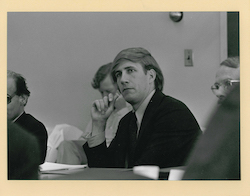
Participants included Winfried Buehler (University of Hamburg), Aubrey Diller (Indiana University), Wilhelm Ehlers (Thesaurus Linguae Latinae, Munich), G. M. A. Grube (Trinity College), Albert Henrichs (Harvard University), Charles Murgia (UC Berkeley), Brooks Otis (University of North Carolina, Chapel Hill), David W. Packard (UCLA), Jaan Puhvel (UCLA), Bruno Snell (University of Hamburg), Stephen Waite (Dartmouth College), and members of the UC Irvine Classics faculty, notably Peter Colaclides, Theodore Brunner, and Luci Berkowitz. UC Irvine's founding Chancellor, Daniel G. Aldrich (seen in this photo sitting by the window), also attended the Conference.
Theodore F. Brunner, chair of Classics at the time, was named the first TLG Director, a position he held for almost 25 years. Marianne McDonald's generous gift of $1 million provided the financial foundation for this ambitious undertaking. McDonald initially requested anonymity until she completed her graduate studies and attended the conference as a member of the Classics Department. Her pivotal role in establishing the TLG became widely recognized in subsequent years. In 1999, the American Philological Association (now the Society for Classical Studies) honored her with its Distinguished Service Award.
David W. Packard and the Ibycus System
The challenge of this huge undertaking was originally met with the help of several classicists and technology experts, but primarily thanks to the efforts of David W. Packard, who created the Ibycus system, namely the hardware and software originally used to correct the digitized texts and to search the TLG corpus. Packard also developed the character and formatting encoding convention for Greek, called Beta Code. Beta Code assigns an ASCII position to each of the twenty-four Greek letters. Diacritics are indicated by non-alphabetic characters following the accented vowel. Beta Code remains to this day the most practical way to encode polytonic Greek data. From the beginning, the TLG adopted a rigorous digitization process based on double-keyboarding, in which texts are entered independently and the resulting files are compared to identify errors. Over the years, digitization work has been carried out in Korea, the Philippines, and China. Typists without knowledge of Greek or English enter the texts using Beta Code, which is subsequently converted into Unicode for display and processing. This approach has enabled the project to digitize large quantities of Greek literature while maintaining high standards of textual accuracy.
In addition to digitizing texts, the TLG developed the Canon of Greek Authors and Works, originally conceived as a "registry" of all works included or about to be included in the corpus. Over time, the Canon developed into an indispensable tool for the study of Greek literature. Luci Berkowitz and Karl Squitier produced the bulk of these bibliographies until the early 1990s, when they retired from the University. Maria Pantelia assumed responsibility for the Canon once she joined the project. In 2001, the Canon became searchable online. Since then, it has been substantially expanded and updated to incorporate new editions, additional bibliographical information, and a growing number of Byzantine and post-Byzantine works. What began as an internal cataloging tool has become a major scholarly resource in its own right.

The Early Days: Greek Texts on CD-ROMs
The TLG began distributing digital texts to interested scholars on magnetic tapes as early as 1976. A major technological advance followed in 1985, when David Packard and William Johnson developed the Ibycus Scholarly Personal Computer (PSC), an innovative system designed specifically for the editing, searching, and retrieval of classical texts.
Developed before the widespread adoption of the Apple Macintosh, the Ibycus PSC combined multilingual word processing with high-speed access to large textual databases stored on CD-ROM. Packard, working with Johnson and Wilkins Poe, developed the indexing and retrieval systems that made sophisticated searches of the Greek corpus possible.
These innovations paved the way for the TLG's first CD-ROM, TLG A, released in 1985 with approximately 27 million words. The disk was designed for use with the Ibycus system and did not include independent search software. As personal computers became more widely available in the late 1980s, independent developers created programs that allowed scholars to search the TLG corpus on Macintosh and IBM-compatible computers.
The Ibycus PSC had a lasting influence on the development of digital textual research. It demonstrated the potential of computer-assisted scholarship at a time when many neighboring disciplines had yet to adopt comparable technologies.
In 1988, the TLG® released its second CD-ROM (TLG C), containing approximately 42 million words. That same year, the TLG Advisory Board, chaired by Ihor Ševčenko, approved an expansion of the project's scope to include Byzantine historiography, lexicography, and scholia.
The early 1990s brought significant institutional challenges. In 1993, amid a budget crisis, the University of California introduced incentives for early faculty retirement. Theodore Brunner and Luci Berkowitz retired in 1994 but were subsequently recalled at 50 percent time. Berkowitz continued teaching in the Classics Department, while Brunner undertook the recruitment of his successor.
This was a critical period for the TLG. Various options for its future were considered, including reducing the project to a small operation devoted primarily to licensing existing CD-ROMs. Fortunately, this course was not pursued. Following an extended recruitment process, Maria C. Pantelia joined UC Irvine in 1996 as the TLG's second Director.
The TLG into the 21st Century
When Maria Pantelia assumed the directorship in 1996, the TLG faced a series of technological and organizational challenges. Following Brunner's retirement, the project had experienced a period of reduced activity. Meanwhile, computer technology was advancing rapidly, and the emergence of the World Wide Web was transforming the dissemination of scholarly information.
The Ibycus system, once revolutionary, had become increasingly outdated and could no longer accommodate the growing corpus. The project lacked in-house programming expertise and comprehensive technical documentation for producing new CD-ROMs. Moreover, the Packard Humanities Institute (PHI) no longer maintained the hardware and software required to produce another disk.
Pantelia recognized that the project's long-term survival depended on a fundamental modernization of its technological infrastructure and the development of internal expertise. The TLG needed to migrate its data to widely supported computing platforms, recruit staff with interdisciplinary skills, develop its own text-processing and CD-ROM production capabilities, and ultimately create an online search and retrieval system.
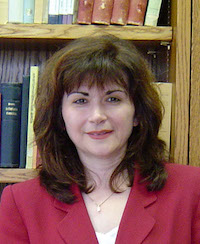
Her first priority was to assemble a team capable of meeting these challenges. In January 1999, she recruited Nick Nicholas (Ph.D. in Linguistics, University of Melbourne) and Nishad Prakash (B.S. in Classics and Computer Science, Ohio Wesleyan University). Both brought an unusual combination of expertise in Greek and computer programming. By the summer of 1999, the TLG had developed a new text correction and verification system and a database infrastructure capable of supporting its expanding bibliographical resources.

Migration out of Ibycus was a Herculean effort that lasted several months. Thousands of texts had to be transferred individually from the old system using a 2,200-baud modem. For two months, project staff worked eight-hour shifts downloading files one at a time. Large texts frequently exceeded the system's memory capacity, causing transfers to fail. Some files became corrupted and required manual reconstruction.
The Canon database presented additional difficulties. Its thousands of bibliographical records could not be transferred as a single file and had to be divided into smaller segments. During the transfer, formatting information was lost and subsequently had to be restored manually.
In September 1999, the project completed its migration. The HP-1000 computer was disconnected, and the Ibycus system was replaced by the TLG's new in-house infrastructure.
TLG E
With the new technological infrastructure in place, Pantelia turned to the production of a long-awaited CD-ROM. The TLG had not released a new disk since 1992, and demand for an updated version was substantial.
Work on CD-ROM E began in the early summer of 1999. In the absence of adequate technical documentation, Nick Nicholas was able to decode the format developed by the Packard Humanities Institute and reverse-engineer the software to produce a disk that would be compatible with earlier CD-ROMs. Once the basic programming was in place, the project collaborated with software developers to ensure compatibility with their search applications.
TLG E was released in February 2000. It marked a major milestone in the project's history: for the first time, a TLG CD-ROM had been produced entirely in-house, under Pantelia's direction.
The achievement represented much more than the release of an updated corpus. Within approximately one year, the TLG had acquired the technological expertise and infrastructure necessary to manage, maintain, and disseminate its own data independently. This transformation laid the foundation for the project's subsequent development.

The Online TLG
In April 2001, the TLG launched its first online version, providing web access to its bibliographical and textual resources. The development of the online TLG took approximately one year and involved the creation of a search engine, user interface, and site documentation. In addition to the programming tasks, massive correction of the texts was done during that time. The new Verification and Correction system (V&C) allowed the TLG to correct errors more efficiently. As a result, the corpus grew dramatically. An Abridged version of the corpus was established, containing a number of works from authors that have traditionally been used in college-level instruction of Greek (Homer and Hesiod, the dramatists, Plato and Aristotle, Xenophon, the orators, etc.). The Abridged version was meant to make the TLG accessible to high schools and small undergraduate programs that might not be able to afford a subscription to the full corpus. The Abridged version has continued to expand. When texts in the full corpus are replaced by newer editions, earlier editions may be added to the Abridged collection, increasing the number of works available to the public.
The full Canon of Greek Authors and Works was also made available to the public.
In 2002, with the support of an equipment grant from Sun Microsystems, the Online TLG was installed on an UltraSPARC-II server, appropriately named "Stephanus" in honor of the Renaissance scholar Henri Estienne. The original server has since been replaced by successive generations of more powerful systems designed to support growing usage and provide reliable, high-speed access to the corpus.
The Extension of the Canon into the Byzantine Period
During the late 1980s, the TLG had begun extending its chronological coverage beyond classical antiquity to include selected Byzantine texts, particularly scholia, historiographical works, and lexica. However, the resulting boundaries remained uneven and excluded substantial portions of later Greek literature.
Pantelia recognized that a comprehensive digital library of Greek literature should not be constrained by an arbitrary chronological division. Under her direction, the project adopted the broader goal of collecting and digitizing Greek texts from antiquity through the Byzantine and post-Byzantine periods and into the modern era.
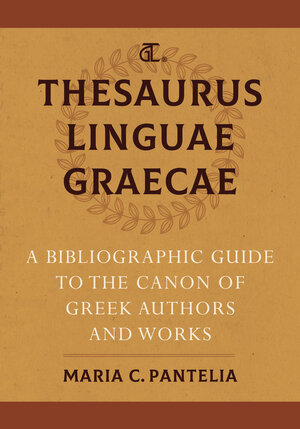
In 2022, all bibliographical information included in the TLG was published by the University of California Press.
The pace of digitization also increased substantially. Today, the online version contains more than twice as many texts as TLG E. Most extant authors and works up to the 20th century have been included in the TLG, and work is underway to fill in any remaining gaps and to expand the corpus into the modern era.
The Canon itself has evolved into a sophisticated bibliographical and textual reference system. In addition to assigning standardized identification numbers to authors and works, its database incorporates detailed citation structures that describe the organization of individual texts and facilitate the precise identification and retrieval of passages.
Collaboration with Unicode
Between 2002 and 2004, the TLG played an important role in completing the representation of polytonic Greek in the Unicode Standard. Maria Pantelia and Richard Peevers worked closely with the Unicode Technical Committee (UTC) to ensure that all characters extant in Greek texts were properly represented in the international character-encoding standard.
The TLG submitted 14 proposals totaling more than 200 characters, all of which were approved by the Unicode Technical Committee and the International Organization for Standardization (ISO) (click to see the TLG Unicode proposals). As of Unicode version 5.1, all characters proposed by the TLG are part of the Unicode Standard. A Quick Reference Guide was also put together so that font developers can quickly find which Unicode code point corresponds to each character. These contributions helped ensure that the full range of polytonic Greek characters, including specialized scholarly symbols, could be represented consistently across computer platforms, applications, and web browsers. The TLG's work thus benefited not only its own corpus but also the broader international community of scholars, publishers, and developers working with ancient and medieval Greek.
The Lemmatization Project
The highly inflected nature of Greek, combined with the linguistic and orthographic diversity of texts spanning more than two millennia, presents significant challenges for electronic searching. A single Greek word may appear in numerous forms, making searches based solely on individual word forms both time-consuming and incomplete.
To address this problem, the TLG launched a major lemmatization initiative in 2003.
The first effort to employ computers in the morphological analysis of Greek was undertaken by David W. Packard in the early 1970s. The TLG's approach involved developing a comprehensive system capable of identifying inflected word forms and associating them with their dictionary headwords, or lemmas.
To support this work, the project digitized and extracted extensive lexical data from major Greek dictionaries, including those of Liddell–Scott–Jones, Lampe, Bauer, Trapp, Kriaras, Triantafyllides, Koumanoudes, and ILNE. The resulting lemmatizer is capable of automatically recognizing approximately 98.3 percent of the word forms in the TLG corpus. A lemmatized search engine was first released in beta form in 2006 and subsequently became a standard feature of the TLG platform.
Lemmatization transformed the way scholars could search the corpus. Rather than searching separately for every possible inflected form, users could retrieve occurrences associated with a common lemma, making it possible to conduct more comprehensive linguistic and literary investigations.
The TLG and Greek Lexicography
The lemmatization initiative also led the TLG to expand its activities in digital lexicography. The first major effort was the digitization of the Liddell-Scott-Jones (LSJ) dictionary, the premier lexicon for ancient Greek. This was followed by Cunliffe's Lexicon of Homeric Greek and Powell's Lexicon to Herodotus.
In 2013, the TLG and the Austrian Academy of Sciences joined forces to create a digital version of the Lexikon zur byzantinischen Gräzität (LBG). In 2020, the project released a searchable version of S. Koumanoudes' Συναγωγή νέων λέξεων, further extending its lexical coverage into later periods of the Greek language.
In 2023, the TLG and the Academy of Athens entered into an agreement to develop an online version of the Historical Dictionary of Modern Greek (ILNE).
The digitization of these resources involved more than converting printed dictionaries into electronic text. Lexical entries were encoded, structured, and linked to the TLG corpus wherever possible, enabling users to move directly between dictionary definitions, morphological information, and the passages in which words occur.
These efforts transformed the TLG from a primarily textual database into an integrated environment for the study of Greek language and literature.
The TLG Search Engine
In February 2015, the TLG released a substantially redesigned version of its search engine. The new system retained the capabilities of the original platform while introducing a more intuitive interface and a broader range of research tools.
Enhancements included expanded search options, intertextual phrase matching, statistical analysis, and improved integration with the TLG's growing collection of digitized dictionaries.
The search engine has continued to evolve, incorporating tools for morphological analysis, parallel browsing, N-gram searches, and the exploration of linguistic patterns across authors, works, genres, and historical periods.
These developments reflect the TLG's transformation from a searchable collection of texts into a comprehensive digital research environment integrating textual, lexical, and linguistic resources.
In October 2026, the TLG launched a completely redesigned website and user interface, marking another major milestone in the project's technological development. The new platform was designed with accessibility and usability as central priorities, incorporating modern web accessibility standards and responsive design to support access from desktop computers, tablets, and mobile devices. The redesign also introduced a more intuitive navigation system and streamlined access to the corpus, dictionaries, and research tools. These improvements reflect the TLG's continuing commitment to making its scholarly resources accessible to a broader community of users while adapting to evolving technologies and expectations for digital research.
More Than Five Decades of Digital Scholarship
More than five decades after its establishment, the Thesaurus Linguae Graecae has realized the ambitious vision that inspired its creation. What began as an effort to apply computer technology to the study of Greek vocabulary has developed into one of the world's most extensive digital collections of Greek literature.
The TLG Digital Library contains virtually all surviving Greek literary texts from Homer (8th century B.C.) to the fall of Byzantium in A.D. 1453, together with a substantial collection of post-Byzantine and modern Greek works. The corpus is available to more than 2,000 universities and research institutions worldwide and is used by thousands of scholars, educators, and students across disciplines including classics, archaeology, history, art history, philosophy, linguistics, and religious studies.
Today, the TLG is more than a repository of digitized texts. Its integration of an extensive textual corpus, authoritative bibliographical data, lexical resources, lemmatization, and advanced analytical tools enables scholars to explore the Greek language and its literary traditions in ways that would have been unimaginable when the project was founded.
As computational methods and artificial intelligence continue to reshape scholarly research, the TLG remains committed to technological innovation while preserving the accuracy, reliability, and scholarly integrity of its corpus. Its mission continues to be guided by the vision articulated more than half a century ago: to make the surviving record of Greek literature accessible for research, teaching, and future generations of scholarship.