![[TLG]](http://www.tlg.uci.edu/logo.gif)
TLG Search Engine
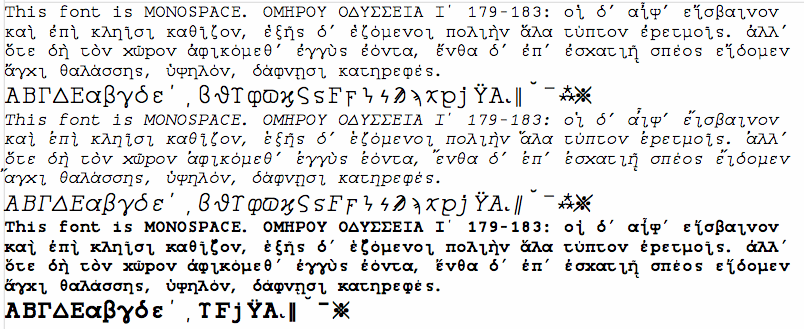
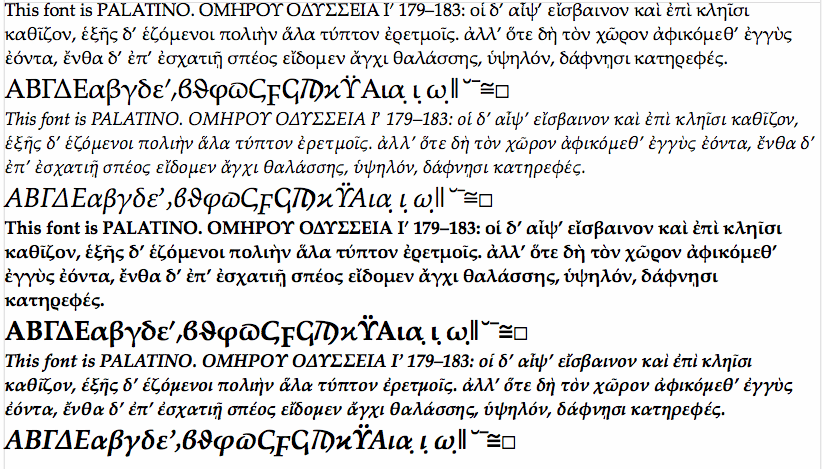
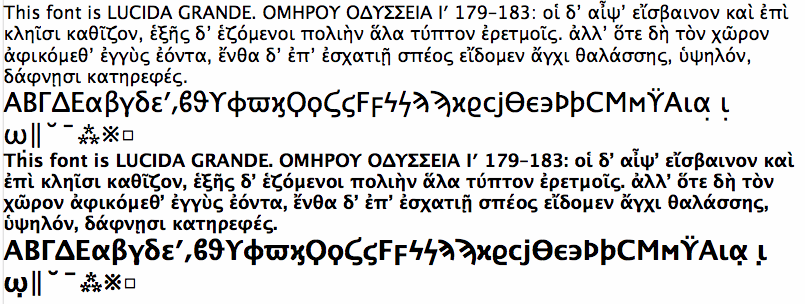
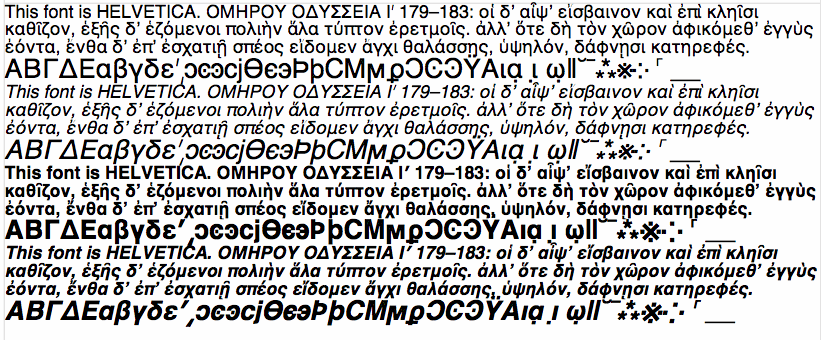
This is a test page meant to show you how various characters will appear if you have the Greek font properly installed in your system.
2009-06-13: This page is no longer being maintained: refer to the current TLG Unicode Test page.
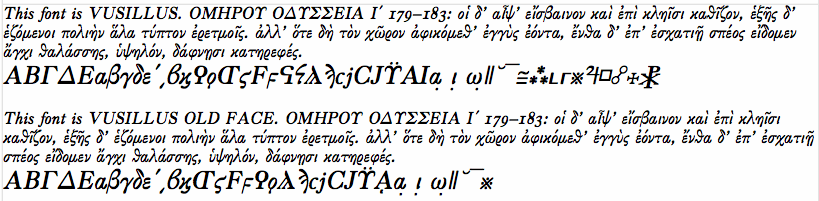
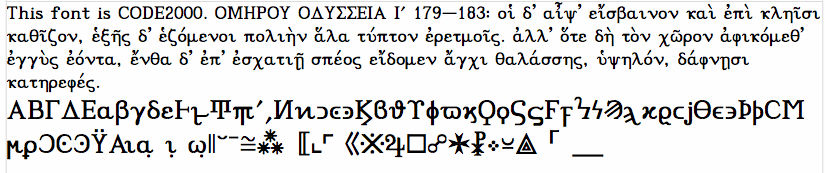
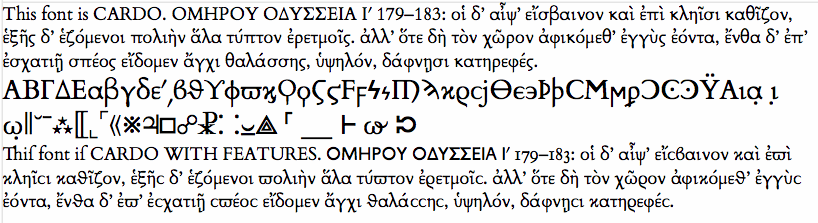
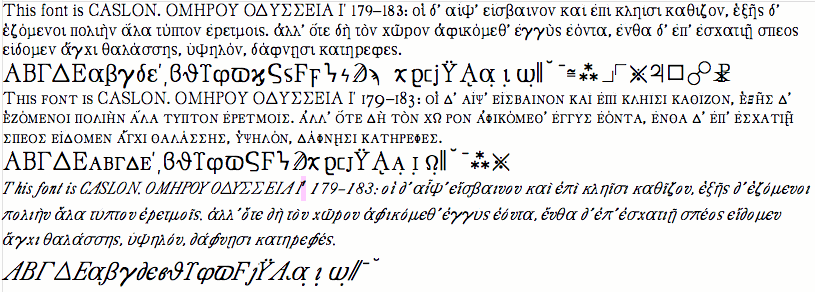
As of this writing, the following Unicode fonts support polytonic Greek:
*.TTF) to
your
Library/Fonts folder. (The fonts marked [MAC]
are already Macintosh-native, and will not work on PC.)
Unix solutions include the Caslon and Computer Modern Unicode fonts, cited above, and the ClearlyU BDF Font (Mark Leisher: freeware) [Download]. TrueType fonts will install successfully on Linux; see the Corefonts project for one way of doing so.
We have excluded from this listing as impractical fonts which have only a partial implemetation of Greek Extended.
There is some discussion of setup issues on our Font Configuration page. See also:
To guarantee optimal display, we use the precomposed Unicode polytonic
combinations, where available (Normalization Form C), rather than
combining
diacritics (Normalization Form D). For example,
A)/ is displayed as the single character
ἄ
(ἄ), not the combined characters
ἄ
(ἄ).
The two Unicode strings are definitionally entirely equivalent, and it
is the
Operating System's job to render the latter as the former. However,
Greek
polytonic does not follow the default behaviour for multiple diacritics;
by
default these stack on top of each other (as in Vietnamese), whereas an
acute
or grave appears next to the breathing mark. Since polytonic
Greek is
a relatively low priority in the computer industry, and the proper
handling of
Unicode diacritics is still incipient (requiring sophisticated font
engines
like OpenType still not widely available), it is safer to use the
precomposed
characters. In fact, the World Wide Web
Consortium recommends the use of Normalization Form C for World Wide
Web documents.
In this, the TLG differs from Perseus, which formerly used combining diacritics (it now allows both options). This allowed Perseus to be viewed with (in ascending order of current quality of rendering): Lucida Sans Unicode, Tahoma, Lucida Grande, Arial Unicode, Code 2000, Gentium, Cardo, TITUS Cyberbit, Athena Unicode and New Athena Unicode, Everson Mono Unicode, Alphabetum, Antioch. Other fonts (Aristarcoj, Palatino Linotype, Porson) currently reject the combining diacritics, and will not display them properly. By using precomposed characters, by contrast, TLG texts are not viewable in Lucida Sans Unicode, but are viewable rather better (for all but non-canonical diacritic combinations) in all the fonts listed above.
Note that the underlying representation of the text, when the TLG converts its texts to Unicode, is still likely to have separate diacritic characters (Normalization Form D), for reasons of internal processing.
MacOSX is more insistent than other operating systems on true boldface or italic versions of fonts being available; whereas other operating systems 'fake' italic or boldface by slanting or thickening the font, MacOSX will either ignore the style command, or switch to a different font which has the style available. In the preceding list, styles other than the default plain are indicated.
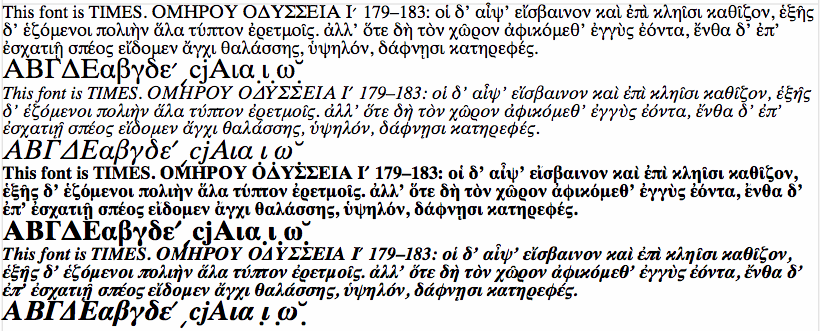
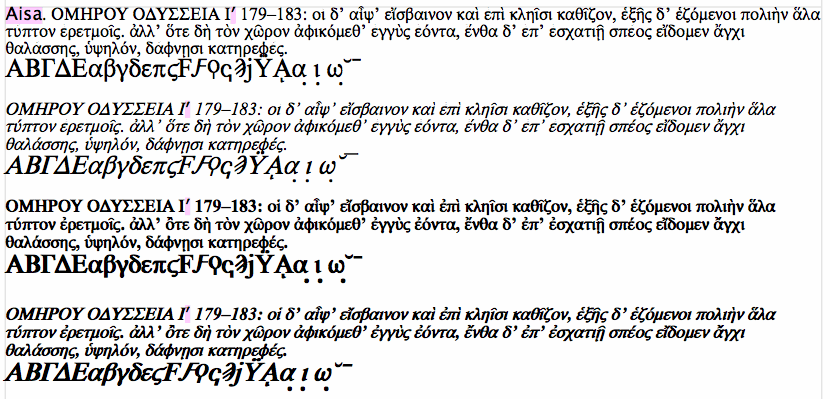
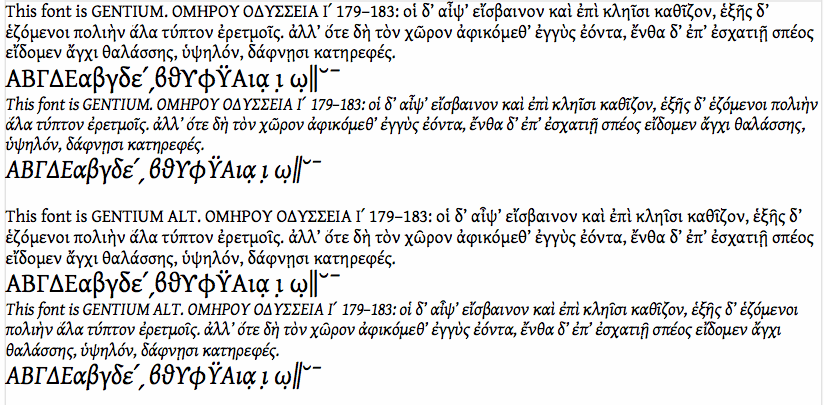
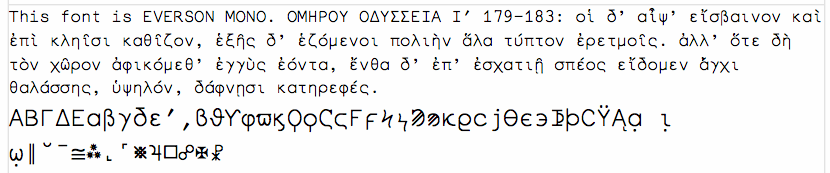
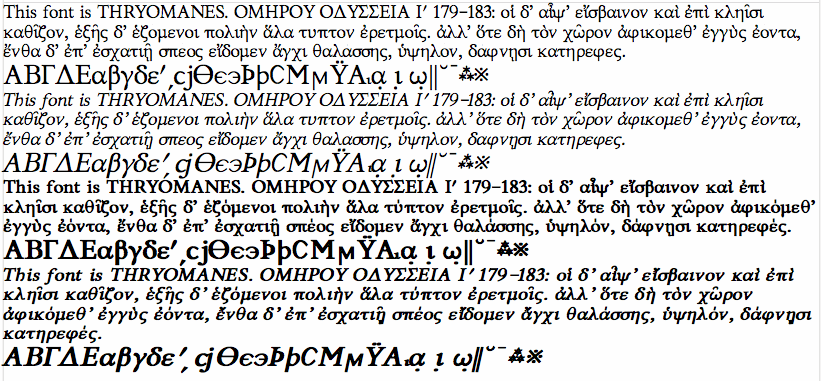
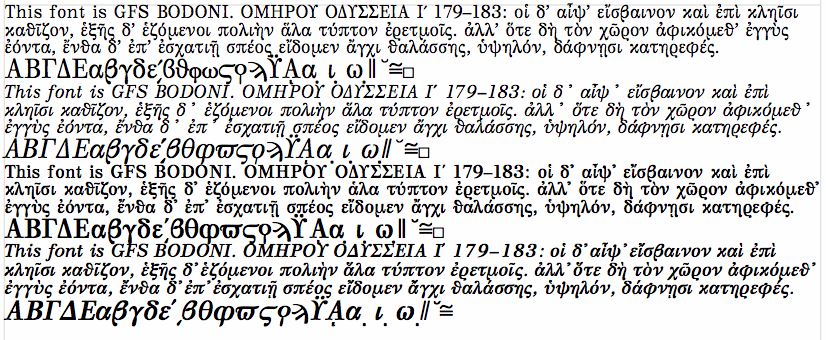
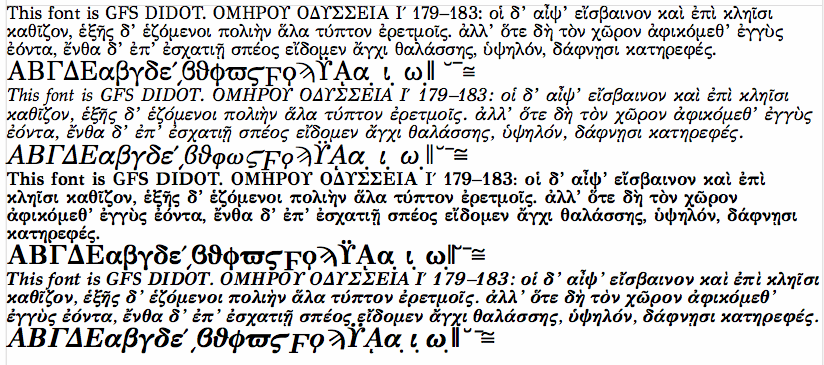
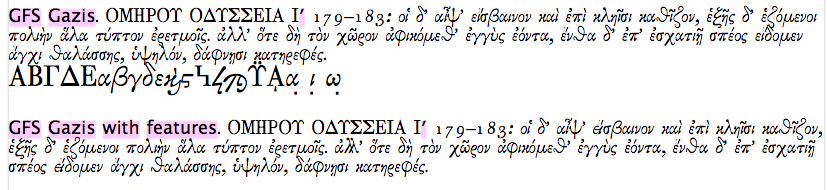
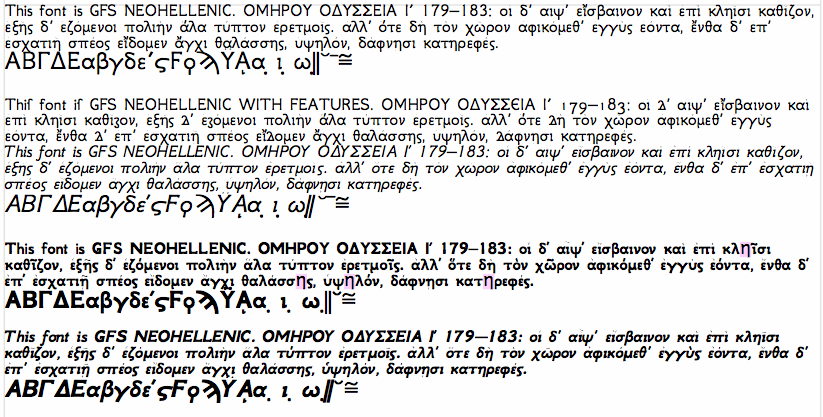
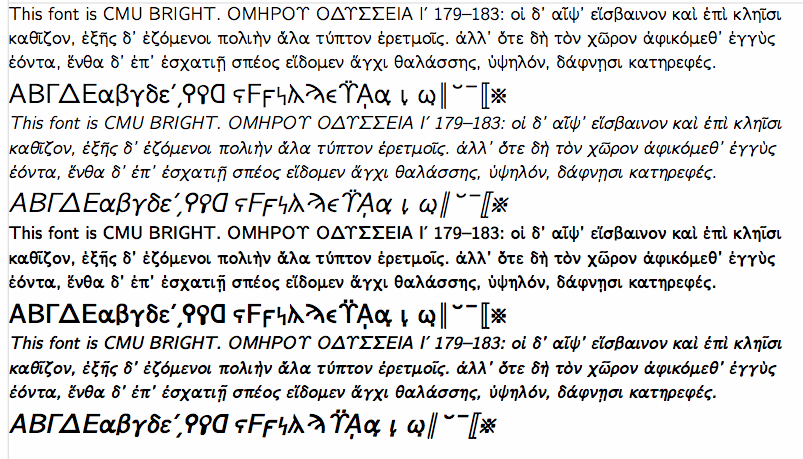
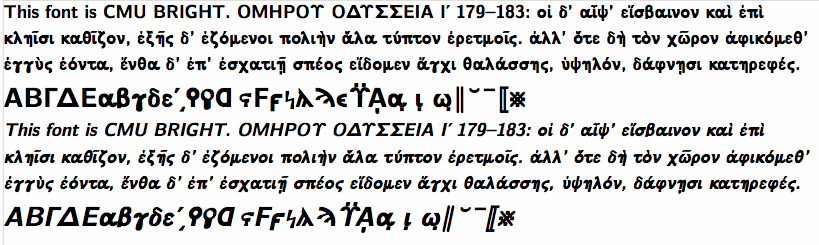
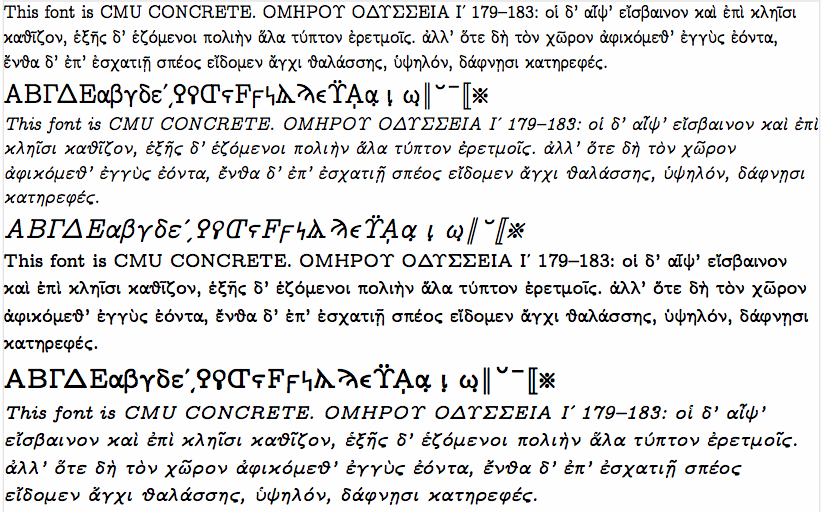
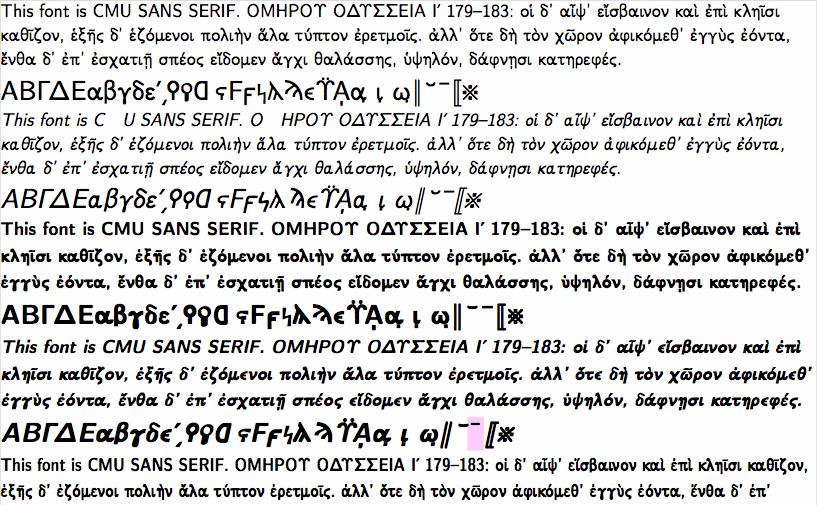
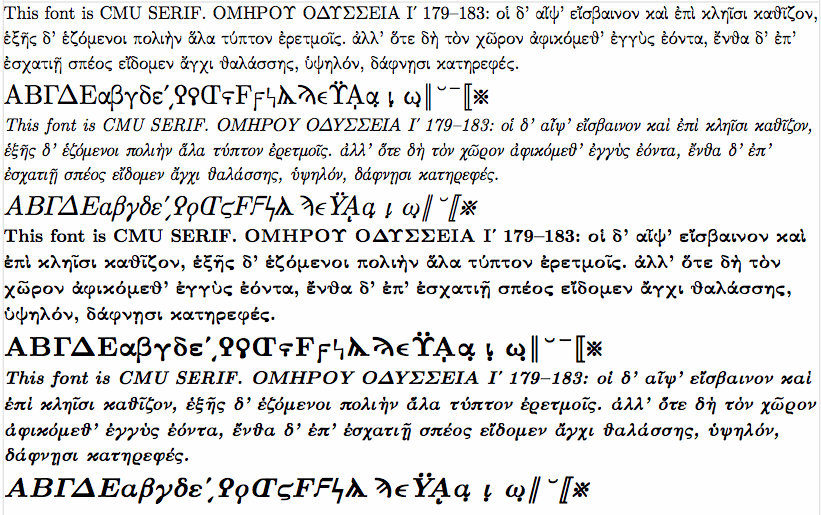
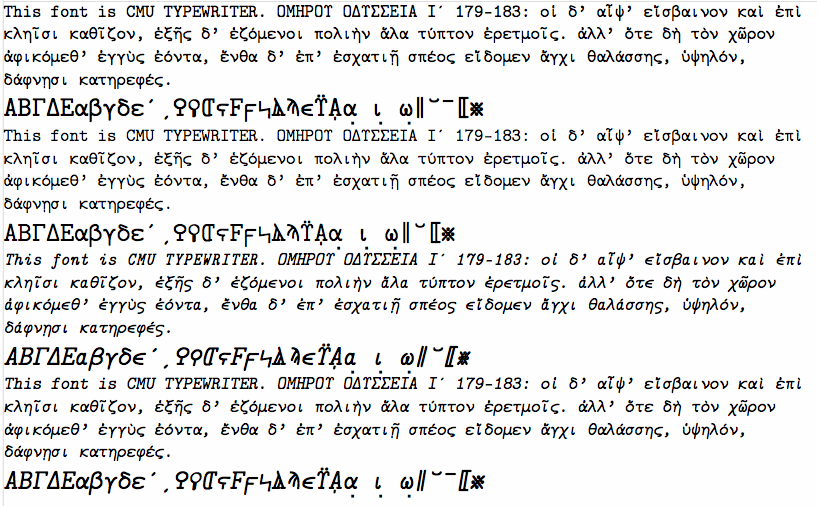
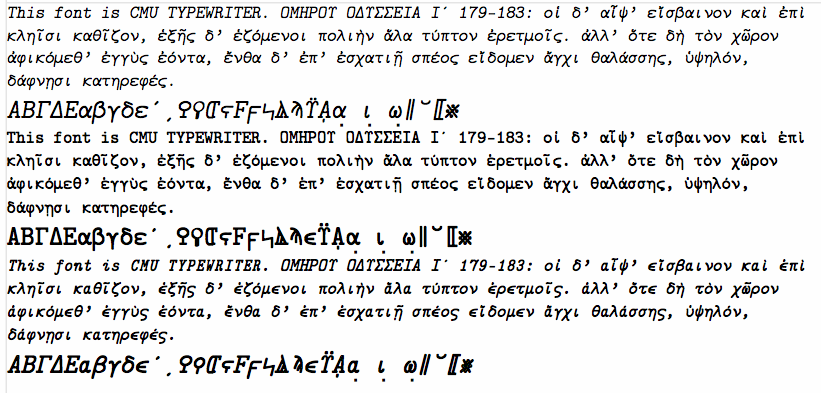
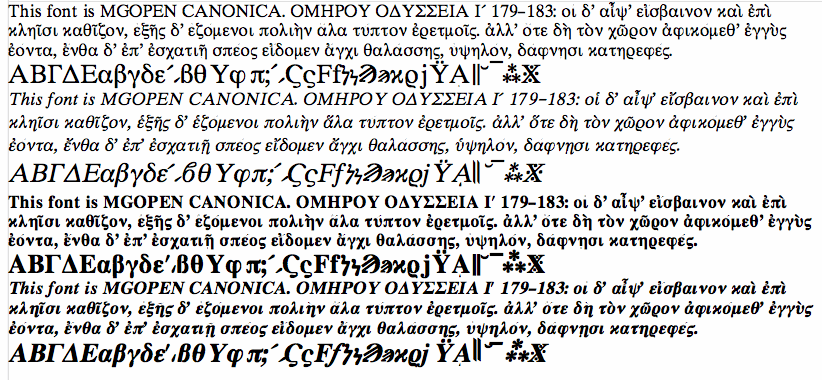
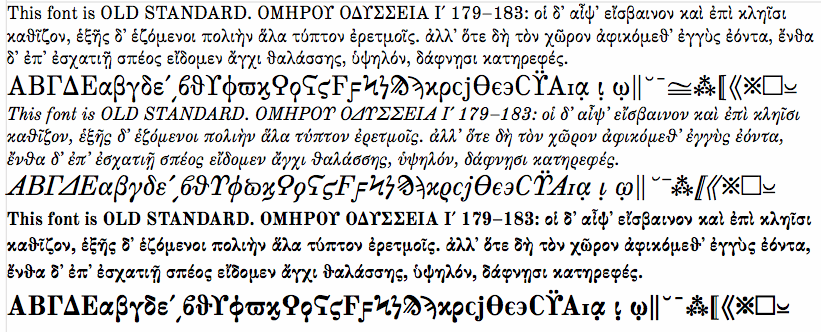
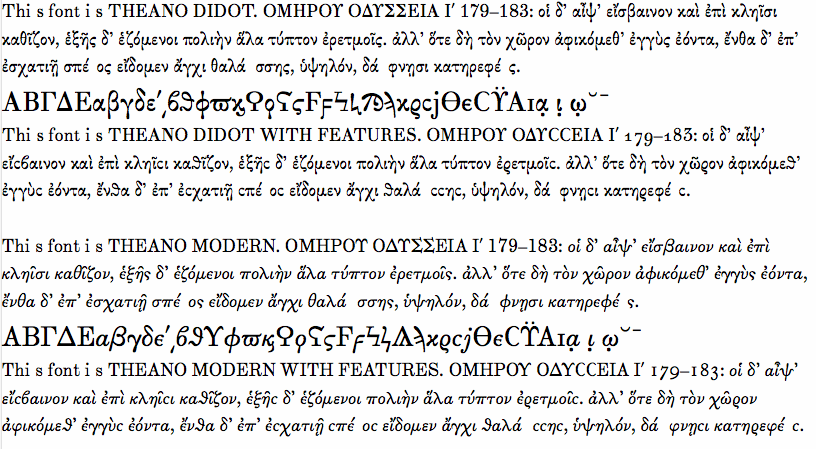
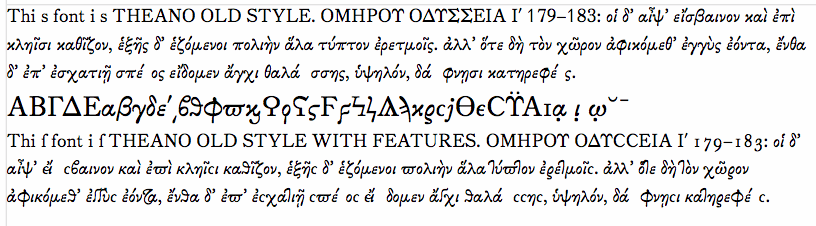
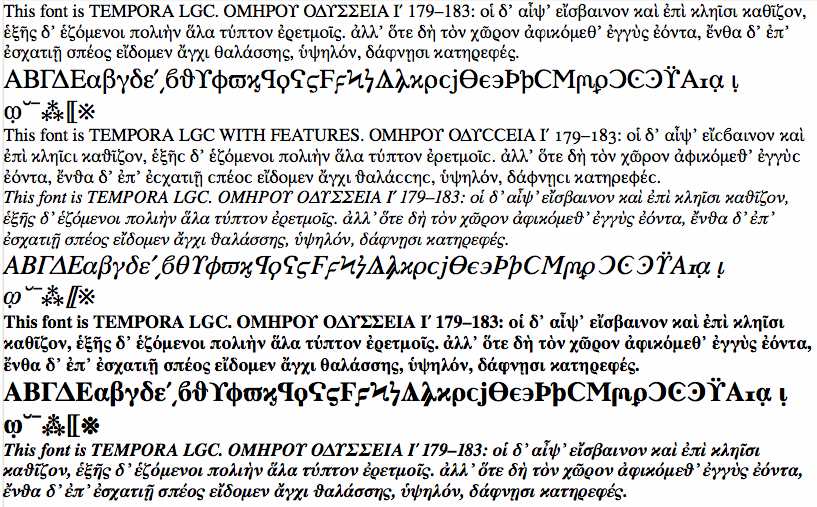
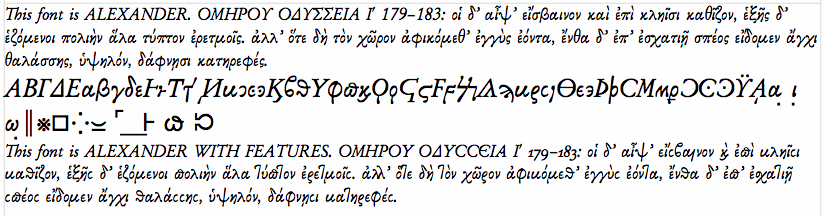
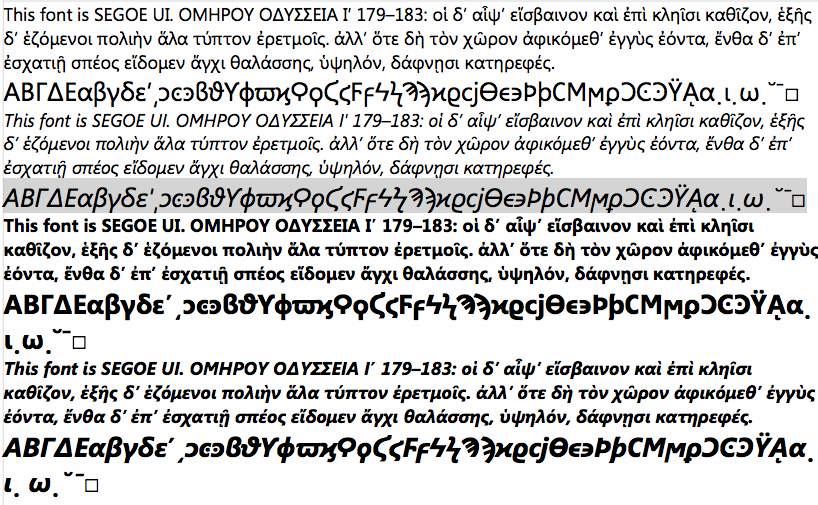
The repertoire of characters required to support TLG text display is still inconsistent from platform to platform and from font to font. In the following, we have listed likely problem characters, and their absence in the fonts we have had access to (Aisa, Alexander, Alkaios, Alphabetum, Antioch, Arial, Aristarcoj, Athena Unicode, Cardo, Caslon, CERG, Code 2000, Chrysanthi Unicode, Computer Modern, DejaVu, Everson Mono Unicode, FreeMono, FreeSerif, Galatia SIL, Galilee Unicode Gk, Gandhari, Gentium, Greek Font Society fonts, jGaramond, KadmosU, LeedsUni, Linux Libertine, Lucida Grande, Magenta, MgOpen Canonica, Monospace, New Athena Unicode, Old Standard, Palatino, Porson, SBL Greek, Silver Humana, Tahoma, Tempora, Times, Thryomanes, TITUS Cyberbit). As will be noted, different fonts have different coverage, and users will have to compromise between aesthetics and coverage in picking their font. (The two do not inherently go together!)
As a general comment, proper display of TLG texts requires
characters not only from the Latin-1, Latin
Extended-A, Greek, and Greek Extended
character sets, but also punctuation and editorial signs to be found in
the General Punctuation, Arrows,
Mathematical Operators, Miscellaneous
Technical, Miscellaneous Symbols, and CJK
Symbols and Punctuation sets. (The latter, though nominally
Chinese punctuation, includes the double square brackets [4,
]4 (deletion brackets), which occur around 5000 times in the
corpus.) Character sets and browsers may have difficultly finding many
of these characters; however, the problem is not Unicode's in such
instances, and it would be improper to devise workarounds (such as, for
example, displaying double brackets as [[ ]]) while work is
continuing on fully implementing Unicode standards. The TLG search
engine also cannot take account of erroneously rendered glyphs such as
Palatino's U+1FEC (Capital Rho with rough breathing, rendered as having
a smooth breathing.)
Note also that some systems (notably MacOSX) are quite good at retrieving symbols from different fonts if the current selected font does not have the required character.
Because the recent additions to Unicode are incorporated in very few fonts, we have divided our listing into pre-Unicode 4.0 and Unicode 4 onwards.
| Absent in | Comments | |||
|---|---|---|---|---|
| Lowercase Digamma | ϝ | U+03DD | Arial, Chrysanthi, FreeMono, FreeSerif, Galilee Unicode Gk, Greek Font Society, jGaramond, Gentium, Palatino, Porson, Silver Humana, Tahoma, Times | |
| Capital Digamma | Ϝ | U+03DC | Alkaios, Chrysanthi, FreeSerif, Galilee Unicode Gk, jGaramond, Gentium, Porson, Silver Humana, Tahoma, Times | The distinction between capital and lowercase digamma was introduced in Unicode 3.0. |
| Lunate Sigma | ϲ | U+03F2 | Aisa, Alkaios, Computer Modern, Chrysanthi, FreeMono, FreeSerif, Gentium, Greek Font Society, jGaramond, Magenta, MgOpen Canonica, Palatino, Porson, Silver Humana, Tahoma | |
| Capital Lunate Sigma | Ϲ | U+03F9 | Aisa, Antioch, Arial, Athena Unicode, Caslon, CERG, Chrysanthi, Computer Modern, FreeMono, FreeSerif, Galatia SIL, Gentium, Greek Font Society, jGaramond, Magenta, MgOpen Canonica, Monospace, Palatino, Porson, Silver Humana, Tahoma, Times | Unicode 3.2 did not differentiate between capital and lower case lunate sigma. (The distinction made in Antioch and Athena Unicode is not part of Unicode, and will not transfer to other fonts: U+03F4 has already been allocated as GREEK CAPITAL THETA SYMBOL.) The TLG-proposed capital lunate sigma has been included in Unicode 4.0. |
| Keraia | ʹ | U+0374 | Aisa, Alkaios FreeMono, Porson, Silver Humana, Tahoma | |
| 'Lightning-bolt' koppa | Ϟ | U+03DE | Alkaios, Chrysanthi, Computer Modern, FreeMono, FreeSerif, Gentium, jGaramond, Porson, Silver Humana, Tahoma, Times | Vusilius Old Face, Aisa, Arial, Greek Font Society all render the 'lightning-bolt' koppa as a Q-like koppa. Vusilius, Palatino, Alphabetum, SBL Greek, Athena & New Athena render the 'lightning-bolt' koppa in a more rounded fashion than might perhaps be familiar to Greeks from contemporary usage --- particularly in capital form. Aristarcoj, Galilee Unicode and SIL Galatia, on the other hand, follow the modern angular shape. |
| Q-like Koppa | Ϙ | U+03D8 | Aisa, Arial, Caslon, Chrysanthi, FreeMono, FreeSerif, Galatia SIL, Gentium, Greek Font Society, jGaramond, Linux Libertine, Magenta, Monospace, Palatino, Porson, Silver Humana, Tahoma, Thryomanes, Times, Vusilius Old Face (but not Vusilius) | Unicode (as of version 3.2, early 2002) differentiates between this koppa (epigraphical) and the numerical koppa; this does not affect the TLG data bank, since the Beta Code distinction between the two koppas is no longer observed. |
| Stigma | Ϛ | U+03DA | Alkaios, Chrysanthi, FreeSerif, Gentium, jGaramond, Porson, Silver Humana, Tahoma, Times | Unicode 3.0 distinguishes between capital and small case numerical symbols. (The small case variants of stigma, koppa and sampi are ϛ, ϟ, and ϡ.) Beta code does not preserve numerical symbol case. Currently these are rendered as capitals; in the near future (once the Unicode 3.0 symbols are more widely implemented), case will be recovered contextually. Case in numerals is currently distinguished in Aisa (but not for sampi), Alexander, Alphabetum, Antioch, Aristarcoj, Athena and New Athena Unicode (but not in Athena for Q-like Koppa), Cardo, Code 2000, FreeMono (only for stigma), Galilee Unicode Gk (only for sampi and koppas), Galatia SIL (not for Q-like Koppa), Lucida Grande, Old Standard, SBL Greek, Tempora, TITUS Cyberbit. |
| Alternate Stigma | #4 | |||
| Sampi | Ϡ | U+03E0 | Chrysanthi, FreeMono, FreeSerif, Gentium, jGaramond, Porson, Silver Humana, Tahoma, Times | |
| Low keraia | ͵ | U+0375 | Aisa, Alkaios, FreeMono, Porson, Tahoma | |
| Capital Upsilon diaeresis | Ϋ | U+03AB
| Galilee Unicode Gk | |
| Capital Iota diaeresis | Ϊ | U+03AA
| ||
| Rho with smooth breathing | ῤ | U+1FE4 | jGaramond | |
| Iota with circumflex and diaeresis | ῗ | U+1FD7 | jGaramond | |
| Omicron with smooth breathing and circumflex | ὀ͂ | U+03BF U+0313
U+0342 | Aisa, FreeMono, Palatino, Porson, Silver Humana | Displays well in Athena and New Athena Unicode, Alphabetum, Antioch, Everson Mono, FreeSerif, Galatia SIL. Circumflex appears beneath or on top of breathing mark in Arial, Gentium, Code 2000, Lucida Grande and TITUS Cyberbit. Circumflex appears to the side of breathing in Tahoma. Breathing appears to the side of circumflex in Galilee Unicode Gk. Combining diacritics do not exist in Magenta or Aisa; only combining acute, grave, and diaeresis exist in FreeMono. |
| Capital Alpha with iota adscript | ᾼ | U+1FBC | Galilee Unicode Gk (but the diacritics with capitals and adscripts are present), jGaramond (but FreeSerif has no other diacritics on its capital adscripts) | Note that the Unicode specification specifically talks of adscript (prosgegrammeni) rather than subscript (ypogegrammeni), though the accompanying drawing in the Unicode 2.0 specification showed a subscript; this has been made consistent in Unicode 3.0. The subscript reflects some Modern Greek practice; the adscript reflects usual Western practice. The adscript displays as follows: Subscript: Aisa, Alexander, Arial, Athena, Chrysanthi, Computer Modern, DejaVu, FreeMono, FreeSerif, Greek Font Society, MgOpen Canonica, Old Standard, Segoe, Theano Didot, Theano Old Style, Tempora, Tahoma, TITUS Cyberbit, Vusilius Old Face; Lowercase Adscript: Alkaios, Alphabetum, Aristarcoj, Cardo, CERG, Code 2000, Galatia SIL, Galilee Unicode, Gandhari, Gentium, Hindsight, LeedsUni, Lucida Grande, New Athena, Palatinos, Theano Modern, Thryomanes, Times; Uppercase Adscript: Vusilius. SBL Greek allows both adscript and subscript as variants; it defaults to adscript. |
| Capital alpha with acute | Ά | U+1FBB | jGaramond | |
| Capital alpha with circumflex | Α῀ | U+0391
U+1FC0
| ||
| Under-dot | α̣ ι̣ ω̣ | U+0323 | Alexander, Alkaios, FreeMono, Galatia SIL, Magenta, Porson, Silver Humana | |
| Missing letter dot | ̣ | U+0323 | Alexander, Alkaios, FreeMono, Galatia SIL, Magenta, Porson, Silver Humana | |
Double vertical bar
(%17) | ‖ | U+2016 | Aisa, Alkaios, DejaVu, FreeMono, FreeSerif, Galatia SIL, jGaramond, Porson, Silver Humana, Tahoma, Tempora, Times | |
Breve
(%40) | ˘ | U+02D8 | Alexander, Galatia SIL, Porson | |
Macron
(%41) | ˉ | U+02C9 | Alexander, Computer Modern (some fonts), Galatia SIL, Greek Font Society, Porsons, Times | |
Approximation sign
(%106) | ≅ | U+2245 | Aisa, Alexander, Alkaios, Cardo, Computer Modern, DejaVu, Galatia SIL, Gandhari, Gentium, LeedsUni, Linux Libertine, Lucida Grande, Magenta, MgOpen Canonica, Porson, SBL Greek, Silver Humana, Tahoma, Tempora, Thryomanes, Times, TITUS Cyberbit, Vusilius Old Face (not Vusilius) | |
Three-asterisk sign
(%158) | ⁂ | U+2042 | Aisa, Alexander, Alkaios, Athena, Computer Modern, DejaVu, FreeMono, Galatia SIL, Gentium, Greek Font Society, jGaramond, Linux Libertine, Palatino, Porson, SBL Greek, Silver Humana, Tahomas, Times, Vusilius Old Face (not Vusilius) | |
Double square bracket
([4) | 〚 | U+301A | Aisa, Alexander, Alkaios, Antioch, Athena, Caslon, CERG, DejaVu, Everson Mono Unicode, FreeMono, FreeSerif, Galatia SIL, Gandhari, Gentium, Greek Font Society, Hindsight, jGaramond, KadmosU, LeedsUni, Linux Libertine, Lucida Grande, Magenta, MgOpen Canonica, Monospace, Palatino, Porson, Silver Humana, Tahoma, Thryomanes, Times | |
Upper partial square bracket
([5) | ⌞ | U+231E | Aisa, Alexander, Alkaios, Antioch, CERG, Chrysanthi, Computer Modern, DejaVu, FreeSerif, Galatia SIL, Gandhari, Gentium, Greek Font Society, jGaramond, LeedsUni, Linux Libertine, Lucida Grande, Magenta, MgOpen Canonica, Old Standard, Palatino, SBL Greek, Silver Humana, Tahoma, Tempora, Theano, Thryomanes, Times | Athena has the left bracket, but is missing the matching right bracket. |
Lower partial square bracket
([6) | ⌜ | U+231C | Aisa, Alexander, Alkaios, Antioch, CERG, Chrysanthi, Computer Modern, DejaVu, FreeSerif, Galatia SIL, Gentium, Greek Font Society, jGaramond, LeedsUni, Linux Libertine, Lucida Grande, Magenta, MgOpen Canonica, Old Standard, Palatino, Porson, SBL Greek, Silver Humana, Tahoma, Tempora, Theano, Thryomanes, Times, TITUS Cyberbit | Athena and New Athena currently have the left bracket, but are missing the matching right bracket. |
Double angle bracket
([18) | 《 | U+300A | Aisa, Alexander, Alkaios, Antioch, Athena, Caslon, Computer Modern, DejaVu, FreeMono, Galatia SIL, Gandhari, Gentium, Greek Font Society, Hindsight, jGaramond, LeedsUni, Linux Libertine, Lucida Grande, Magenta, MgOpen Canonica, Monospace, New Athena Unicode, Palatino, Porson, Silver Humana, Tahoma, Tempora, Thryomanes, Times | |
Asteriskos
(#13) | ※ | U+203B | Aisa, Alkaios, DejaVu, FreeMono, Galatia SIL, Gentium, Greek Font Society, jGaramond, Palatino, Porson, SBL Greek, Silver Humana, Tahoma, Times | |
Jupiter
(#200) | ♃ | U+2643 | Aisa, Alexander, Alkaios, Aristarcoj, Computer Modern, FreeMono, Galatia SIL, Galilee Unicode Gk, Gandhari, Gentium, Greek Font Society, Hindsight, jGaramond, LeedsUni, Linux Libertine, Lucida Grande, Magenta, MgOpen Canonica, Old Standard, Palatino, Porson, SBL Greek, Silver Humana, Tahoma, Tempora, Theano, Thryomanes, Times, TITUS Cyberbit, Vusilius Old Face (not Vusilius) | Not all fonts with Jupiter have the full set of planetary symbols. |
Hollow square
(#201) | □ | U+25A1 | Aisa, Alkaios, Computer Modern, Galatia SIL, Gandhari, Gentium, Hindsight, LeedsUni, Magenta, MgOpen Canonica, Porson, SBL Greek, Silver Humana, Tempora, Thryomanes, Times, Vusilius Old Face (not Vusilius) | |
Apogee
(#220) | ☍ | U+260D | Aisa, Alexander, Alkaios, Computer Modern, DejaVu, FreeMono, Galatia SIL, Gandhari, Gentium, Greek Font Society, Hindsight, jGaramond, LeedsUni, Linux Libertine, Lucida Grande, Magenta, MgOpen Canonica, Old Standard, Palatino, Porson, SBL Greek, Silver Humana, Tahoma, Tempora, Theano, Thryomanes, Times, TITUS Cyberbit, Vusilius Old Face (not Vusilius) | |
Cross
(#321) | ✠ | U+2720 | Aisa, Alexander, Alkaios, Aristarcoj, Athena, Cardo, Caslon, Computer Modern, DejaVu, FreeMono, Galatia SIL, Gandhari, Gentium, Greek Font Society, Hindsight, jGaramond, LeedsUni, Linux Libertine, Lucida Grande, MgOpen Canonica, Monospace, Old Standard, Palatino, Porson, SBL Greek, Silver Humana, Tahoma, Tempora, Theano, Thryomanes, Times, TITUS Cyberbit, Vusilius Old Face (not Vusilius) | |
Chi-rho digraph
(#322) | ☧ | U+2627 | Aisa, Alexander, Alkaios, Aristarcoj, Computer Modern, DejaVu, FreeMono, FreeSerif, Galatia SIL, Gandhari, Gentium, Greek Font Society, Hindsight, jGaramond, LeedsUni, Linux Libertine, Lucida Grande, Magenta, MgOpen Canonica, Old Standard, Palatino, Porson, SBL Greek, Silver Humana, Tahoma, Tempora, Theano, Thryomanes, Times, TITUS Cyberbit, Vusilius Old Face (not Vusilius) |
| Present in | Comments | |||
|---|---|---|---|---|
| Greek Small Letter Sho | ϸ | U+03F8 | Alexander, Alphabetum, Aristarcoj, Cardo, Code 2000, DejaVu, Everson Mono, Gandhari, Hindsight, KadmosU, LeedsUni, Lucida Grande, New Athena, SBL Greek, Tempora, TITUS Cyberbit | |
| Greek Small Letter San | ϻ | U+03FB | Alexander, Alphabetum, Aristarcoj, Cardo, Code 2000, DejaVu, Gandhari, Hindsight, KadmosU, LeedsUni, Lucida Grande, New Athena, SBL Greek, Tempora, TITUS Cyberbit | |
| Greek Rho with Stroke Symbol | ϼ | U+03FC | Alexander, Alphabetum, Aristarcoj, Cardo, DejaVu, Gandhari, KadmosU, New Athena, SBL Greek, Tempora | |
| Greek Capital Dotted Lunate Sigma Symbol | Ͼ | U+03FE | Alexander, Alphabetum, Aristarcoj, Cardo, DejaVu, Gandhari, KadmosU, New Athena, SBL Greek, Tempora | |
| Greek Small Letter Heta | ͱ | U+0371 | Alexander, Code 2000, DejaVu, New Athena | |
| Four Dot Punctuation | ⁘ | U+2058 | Alexander, Cardo, Code 2000, Gandhari, KadmosU, New Athena, SBL Greek | |
| Metrical Short over Long | ⏓ | U+23D3 | Alexander, Alphabetum, Cardo, Gandhari, KadmosU, New Athena, Old Standard | |
| White Triangle Containing Small White Triangle | ⟁ | U+27C1 | Cardo, Code 2000, KadmosU, New Athena | |
| Right Angle Substitution Marker | ⸀ | U+2E00 | Alexander, Cardo, Code 2000, KadmosU, New Athena, SBL Greek | |
| Paragraphos | ⸏ | U+2E0F | Alexander, Cardo, Code 2000, KadmosU, New Athena, SBL Greek | |
| Greek Acrophonic Attic One Drachma | 𐅂 | U+10142 | Alexander, Cardo, New Athena | |
| Greek Two Thirds Sign | 𐅷 | U+10177 | Alexander, Cardo, New Athena | |
| Greek Vocal Notation Symbol-1 | 𝈀 | U+1D200 | Alexander, Cardo, New Athena |
This text should have strikethrough.
This text should be underlined.
The beginning of the Iliad should look like this:

This is how your browser renders it in HTML 3:
1.1.1.
(1.)
ΙΛΙΑΔΟΣ ΑΜῆνιν ἄειδε θεὰ Πηληϊάδεω ᾿Αχιλῆος (1)
This text should have an
overbar.
This text should have an
underline.
This text should be
expanded.
This text should be
condensed.
This text should be in small
caps.
This is how your browser renders the beginning of the Iliad in HTML
4:
1.1.1.
(1.)
tlg-support@uci.edu